Suitable dispersing agent for pigment helps to wet the surface of pigment, reduce agglomeration of pigment particles, improve grinding efficiency and maintain the stability of pigment particles during storage. In many formulations, customers are often looking for a suitable dispersing agent or chemical dispersant and compare well-known references like MOWIPLUS XW 330, SOLPLUS, SOLSPERSE 24000, SOLSPERSE 32500, SOLSPERSE 16000, SOLSPERSE 5000, SOLSPERSE 8000 or BYK 9076.
The model names presented here are for technical reference only at iSuoChem. We do not sell original branded goods. We supply equivalent dispersant models and alternative dispersing solutions according to application requirements.
The MOWIPLUS XW 330 is reported in public technical references as a polyacrylic-acid ammonium salt type wetting and dispersing agent for coatings. The BYK-9076 is positioned as a solvent free wetting and dispersing additive for solvent-borne and solvent free systems including coatings, adhesives, PVC plastisols and colour masterbatches. Solsperse dispersants are used extensively in liquid organic media as a pigment dispersant and for its stability.
Importance statement:
All original brand names and model numbers used in this article are for reference only for technical comparison and customer search. iSuoChem does not claim its products are original branded products. We only give equivalent model proposals and alternative dispersant solutions.
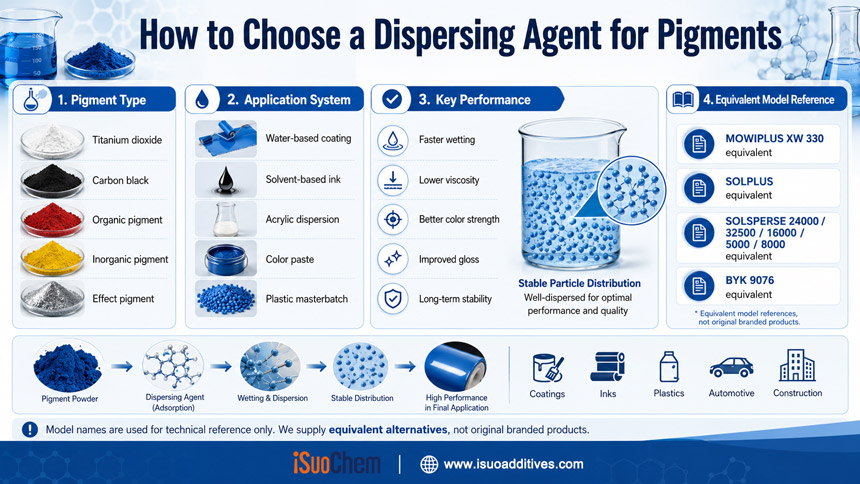
Figure 1: How dispersing agent works in pigment dispersion process
What Is a Dispersing Agent?
A dispersing agent is a functional additive that breaks up the pigment particles and prevents them from flocking together again. The process of pigment dispersion involves mechanical force to break down the pigment powders. But the fine particles are easy to flocculate again without proper dispersant.
A good dispersant chemical usually serves three important functions:
Wetting
It helps liquid medium displace the air on the surface of the pigment.
Support grinding
It helps in reducing particle size in more efficient way while milling.
Stabilisation
It keeps pigment particles evenly dispersed during storage and use.
And that's why it's so important to choose the right dispersing agent for pigments in colour pastes, paints, inks, acrylic dispersion systems and the production of masterbatch.
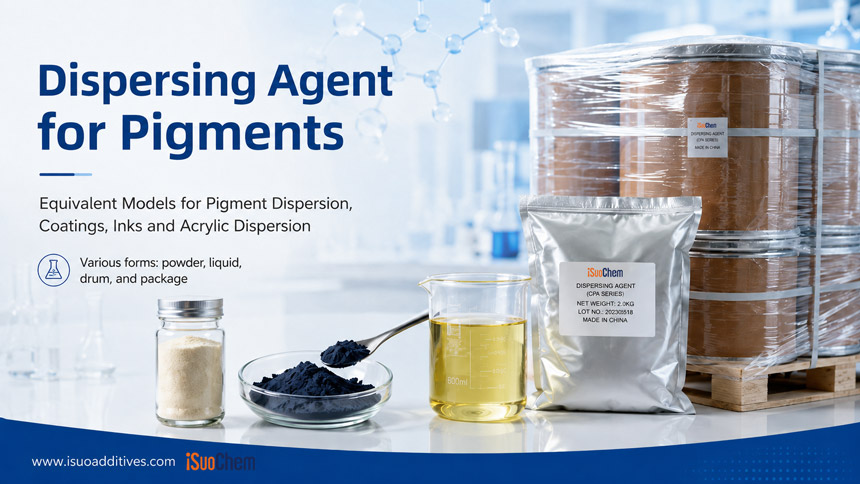
Figure 2: What does a dispersant look like?
Why Pigment Dispersion Is Important
Many problems in production and final products can be caused by poor pigment dispersion.
| Dispersion Problem |
Possible Outcome |
How Dispersing Agent Works |
| Agglomeration of pigment |
Low colour strength |
Enhances particle separation |
| Poor wetting |
Grinding time is long |
Accelerates pigment wetting |
| Flocculation |
Floating, flooding, colour change. |
Improves storage stability |
| High viscosity |
Difficult to process |
Decreases viscosity of millbase |
| Poor gloss |
Dull surface of coating |
Improves pigment distribution |
| Sedimentation |
Formulation is not stable |
Promotes long-term stability |
A good dispersant can reduce the production cost, improve the batch consistency and make the dispersion of pigment more efficiently.
Guidelines for Selection and Standard Reference Models
These names are well known in coatings, inks, plastics and pigment dispersion system and many customers look for MOWIPLUS XW 330, SOLPLUS, SOLSPERSE 24000, SOLSPERSE 32500, SOLSPERSE 16000, SOLSPERSE 5000, SOLSPERSE 8000 and BYK 9076.
iSuoChem does not provide original branded products. For each application we recommend equivalent models based on the formula system, pigment type, solvent type, resin compatibility, and end use application.
| Reference Model |
Keyword |
Typical Application Direction |
iSuoChem Supply Position |
| MOWIPLUS XW 330 |
Aqueous coatings, emulsion paints, inorganic pigments, fillers |
There is equivalent dispersing agent model |
Contact us |
|
SOLPLUS Series
|
Coatings, inks, solvent or resin systems, pigment dispersions. |
Alternative dispersant solution available. |
DotSperse 3204P |
| SOLSPERSE® 24000 |
Organic media, coatings, inks, high performance pigment dispersions |
Model for equivalent technical assessment |
DotSperse 24000 |
| SOLSPERSE 32500 |
Automotive and industrial coatings, liquid organic media |
Equivalent model for solvent systems |
DotSperse 3204/3206 |
| SOLSPERSE 16000 |
Pigment dispersion in inks & coatings |
Alternative dispersant model selection |
Contact us |
| SOLSPERSE 5000 |
Pigment systems with synergist type support |
Same supporting additive choice |
DotSperse 2050 |
| SOLSPERSE 8000 (22) |
Pigment stabilisation and dispersion aid |
Alternative model for formulation tests |
Contact us |
| BYK 9076 |
Solvent-borne, solvent-free coatings, PVC plastisols, carbon black, masterbatch |
Equivalent wetting and dispersing additive available |
Contact us |
In the product information of BYK itself, wetting and dispersing additives are described as additives that support the distribution of solid particles in liquid media and the long-term stability. BYK-9076 is also publicly described as "especially recommended for colour masterbatch and carbon black pigments".
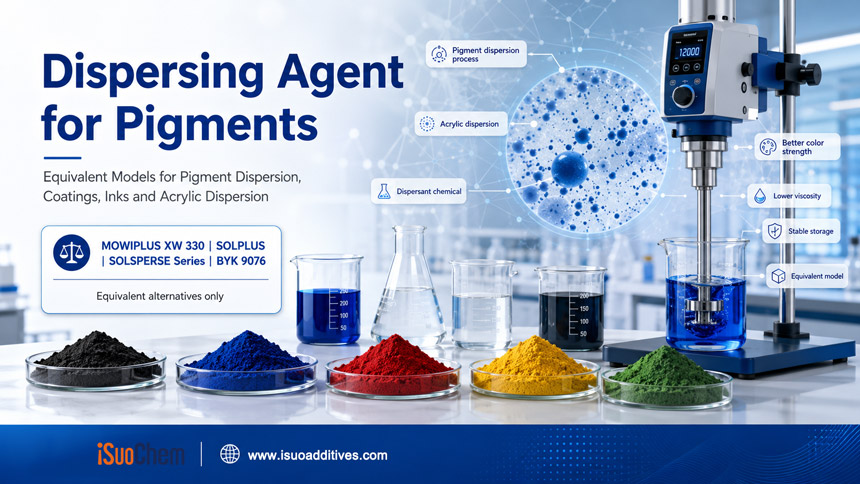
Figure 3: Pigment dispersion process flow with dispersing agent
How to Choose the Right Dispersant for Pigments
Dispersants are specific to the pigment system. A dispersant good for titanium dioxide may not be good for carbon black , organic red pigment , pearlescent pigment or fluorescent pigment .
1. Choose by type of system
| System Type |
Preferred Dispersant Direction |
| Coating, water-based |
Polyacrylate or water compatible dispersing agent |
| Ink for solvent |
Polymeric dispersant or equivalent hyper-dispersant |
| Acrylic dispersion |
Dispersant for water, Compatibility with resins is good |
| Colour paste |
Dispersant for high-efficiency pigment wetting and stabilisation |
| Plastic masterbatch |
Dispersant suitable for compatibility with resin and pigment . |
| System of Carbon Black |
Dispersant for high adsorption with anti-flocculation |
For example, the acrylic dispersion systems generally need to have good compatibility with acrylic emulsion or acrylic resin. The dispersant should not promote excessive foaming, increased viscosity, poor gloss or storage instability.
2. Filter on Pigment Type
| Type of Pigment |
Main Challenge |
Dispersant Requirement |
| Titanium dioxide |
High loading, viscosity management |
Good wetting and reduced viscosity |
| Carbon black |
Hard wetting, high surface area |
Strong adsorption and stabilization |
| Organic pigment |
Flocculation, floating, colour migration |
Polymeric dispersant or synergist carrier |
| Iron oxide pigment |
Sedimentation, thickening |
Good compatibility with inorganic dyes |
| Pearlescent pigment |
Risk of surface damage |
Mild wetting and low shear dispersion |
| Fluorescent pigment |
Colour strength and stability |
Compatible dispersing agent Mild processing |
3. Select by Production Goal
| Production Goal |
Dispersant Selection Emphasis |
| Less grinding time |
Rapid wetting and viscosity reduction |
| Improved colour richness |
Enhanced particle size reduction |
| Enhanced Storage Stability |
Steric or electrostatic stabilisation, strong |
| Dispersant price falls |
Economical equivalent model |
| Better gloss |
Uniformity of pigment particles distribution |
| Reduced sedimentation |
Powerful anti-settling effect |
Many buyers look for dispersing agent price or dispersant price but price should not be judged only by cost per kilogram. A more efficient dispersant could mean lower dosage, less milling time, better stability, and less risk of batch failure.
Pigment dispersion process Basic flow
A typical pigment dispersion process typically involves four major steps:
| Step |
Process |
Objective |
| 1 |
Premixing |
Resin + solvent or water + additive dispersant + mix |
| 2 |
Pigment wetting |
Wetting agent for dispersing pigments |
| 3 |
Milling / grinding |
Break up pigment agglomerates |
| 4 |
Stabilisation |
Preventing re-agglomeration during storage |
Easy process flow
Liquid medium + resin + dispersant → pigment wetting → grinding → particle size reduction → stable pigment dispersion
Many dispersants need to be added before pigment grinding for best performance so they can adsorb onto the pigment surface during the milling stage. Some public technical documents for BYK-9076 suggest incorporation into the millbase before pigment addition for optimum performance.
Cost of Dispersing Agent – How Much Does It Cost?
The price of dispersing agent or dispersant depends on several factors.
| Price Factor |
Description |
| Active content |
Higher active content may lead to lower actual dosage |
| Chemical structure |
Polymeric dispersants are generally more expensive than simple dispersants |
| Application system |
Different chemistry is required for water-based, solvent-based, UV, acrylic dispersion or masterbatch systems |
| Pigment difficulty |
Carbon black and organic pigments often require stronger dispersants |
| Performance target |
High gloss, low viscosity, high colour strength and long-term stability may require higher-end dispersants |
| Equivalent model |
Alternative models can reduce cost while maintaining performance |
"For customers using branded references such as BYK dispersants, SOLSPERSE dispersants, SOLPLUS or MOWIPLUS XW 330, equivalent models can be a practical solution when the objective is to optimise performance and cost.
Why should you choose iSuoChem equivalent dispersing agents?
iSuoChem - Raw Materials for Pigments, Inks, Coatings, Plastics and Related Chemical Systems We can help recommend the suitable equivalent models based on real formulation needs for customers who need a dispersing agent for pigments.
What iSuoChem can offer:
| Customer Requirement |
iSuoChem Solution |
| MOWIPLUS XW 330 alternative needed |
Recommend equivalent water based dispersing agent |
| Equivalent SOLSPERSE 24000 / 32500 / 16000 required |
Suggest alternatives to polymeric dispersant |
| Need SOLSPERSE 5000/8000 equivalent |
Suggest synergist or adjunct dispersant choices |
| Need something like BYK 9076. |
Suggest alternatives additive without solvent or with solvent for wetting and dispersing |
| Want dispersant lower price |
Give economical equivalent model |
| Help with pigment dispersion process |
Provide formulation guidance and example testing recommendations |
Conclusion
Choosing the right dispersing agent for pigments is key to good coating, ink, and color paste quality. A good dispersant helps with wetting, grinding, and long-term stability. While many customers look for well-known brands like BYK, SOLSPERSE, or MOWIPLUS, equivalent models can offer similar performance at better value.
iSuoChem provides alternative dispersant solutions based on your system type, pigment type, and production goals. Contact us to find the right dispersant for your needs.
FAQ (People Also Asked)
1. What is the difference between a wetting agent and a dispersing agent?
Wetting agent Aids in the entry of liquid into the pigment surface. A dispersing agent not only helps in wetting but also stabilises the pigment particles after grinding.
2. Can a single dispersant be used for all pigments?
Usually no. Carbon black, titanium dioxide, organic pigments, inorganic pigments and effect pigments may require different dispersant chemistry.
3. What should I use to choose dispersant for acrylic dispersion?
For acrylic dispersion, the dispersant should be compatible with the acrylic emulsion or acrylic resin. It should give good pigment wetting, low viscosity, storage stability and no detrimental effect on film performance.
4. Is the price of the dispersant the most important factor?
No. The true cost should take into account dosage, grinding time, stability, colour strength, batch success rate, and final product quality.
5. Do you sell real MOWIPLUS, SOLPLUS, SOLSPERSE, BYK products?
No. We do not sell original brand products. We supply only equivalent models and alternative dispersing agents for technical evaluation.
— iSuoChem: Your reliable partner for dispersing agents and alternative solutions.