leave a message
leave a message
Looking for solutions for your product application? Tell us your needs, and we will match you with the most suitable product/solution. Leave us a message directly, and we will get back to you promptly.
Submit
Home

Blogs

Blogs

  • A Comprehensive Guide to the Classification and Selection of Defoamers
    A Comprehensive Guide to the Classification and Selection of Defoamers
    Jun 15, 2026
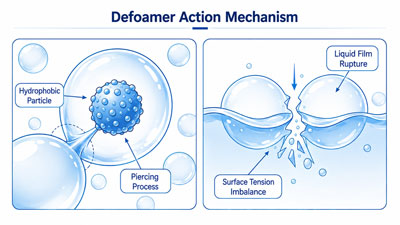
      Defoamers Classification and Selection-A Comprehensive Guide Foam is an everyday problem for industrial production. It can be used in mixing, grinding, pumping, filling, coating, printing, washing, making paper, wastewater treatment or adhesive production. Sometimes foam just reduces production efficiency. In more severe cases it leads to overflow, false volume readings, pin holes, poor leveling, pigment agglomeration, high system viscosity, coating defects and unstable product quality 2 . That is where defoamers come in. A defoamer isn't just a bubble-killing chemical. Correct defoaming agent selection can improve processing stability, reduce surface defects and help manufacturers produce a smoother, cleaner and more reliable final product. But there is no universal defoamer. A...
  • How to select equivalent models of dispersing agent for pigments
    How to select equivalent models of dispersing agent for pigments
    May 26, 2026
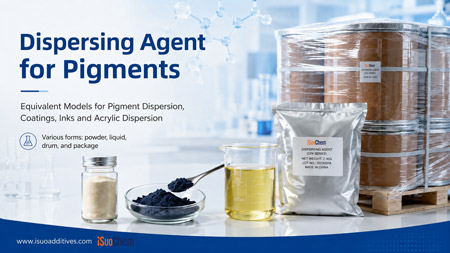
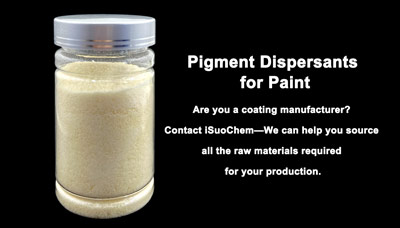
      How to select equivalent models of dispersing agent for pigments to achieve better dispersion of pigments In pigment systems such as coatings, inks, colour pastes, plastics and acrylic dispersion, the quality of the pigment dispersion process directly affects colour strength, gloss, stability, viscosity and final application performance. Suitable dispersing agent for pigment helps to wet the surface of pigment, reduce agglomeration of pigment particles, improve grinding efficiency and maintain the stability of pigment particles during storage. In many formulations, customers are often looking for a suitable dispersing agent or chemical dispersant and compare well-known references like MOWIPLUS XW 330, SOLPLUS, SOLSPERSE 24000, SOLSPERSE 32500, SOLSPERSE 16000, SOLSPERSE 5000, SO...
  • How to Choose the Right Wax Additives for Coatings and Inks
    How to Choose the Right Wax Additives for Coatings and Inks
    May 13, 2026
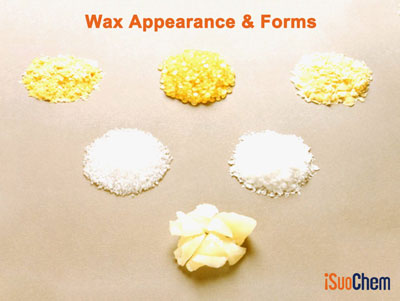
      Wax Additives for Coatings & Inks: A Complete Guide Understanding wax types, properties, and how to choose the right wax for your coating and ink formulations. What is Wax? Wax has a melting point of at least 40°C, as opposed to fats and oils. It has relatively low melt viscosity (droplets) unlike most resins and plastics. It shows no chemical decomposition at higher temperatures, which distinguishes them from natural resins. Classification: Natural, semi-synthetic, synthetic waxes. Wax Appearance & Forms Waxes come in different physical forms to meet various production needs. Common forms include: block, flake, granule, and powder. Each form has its own benefits. Blocks and flakes are easy to transport and store. Granules and powders mix faster into coatings and ink...
  • Top 10 Categories of UV Absorber Additives
    Top 10 Categories of UV Absorber Additives
    Apr 24, 2026
      Top 10 Categories of UV Light Absorbers A UV absorber is a type of light stabilizer capable of absorbing the ultraviolet (UV) portion of sunlight and fluorescent light sources without undergoing any chemical change itself. Since sunlight contains a significant amount of UV radiation—with wavelengths ranging approximately from 290 to 460 nanometers—that is harmful to colored objects, this damaging UV light triggers chemical redox reactions that ultimately cause color molecules to decompose and fade. Physical vs. Chemical Methods Methods for preventing the destructive effects of harmful UV light on colors can be broadly classified into two categories: physical methods and chemical methods. This section focuses solely on the chemical approach—specifically, the use...
  • What is the Difference Between DOTP and DOP?
    What is the Difference Between DOTP and DOP?
    Apr 20, 2026
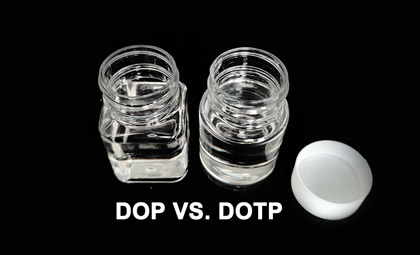
    DOP vs. DOTP: Which Plasticizer Is Right for Your Product? iSuoChem — One of China's Leading Suppliers of Plastic Plasticizers   Introduction In the processing of flexible PVC products and various polymer materials, the choice of plasticizer directly impacts a product's performance, cost, and regulatory compliance. Dioctyl Phthalate DOP and Dioctyl Terephthalate DOTP are two common plasticizers found on the market; however, many buyers lack a clear understanding of the differences between them.   iSuoChem provides a systematic comparison of DOP and DOTP, covering key aspects such as basic chemical information, characteristics, applications, and storage and transportation requirements.   I. Basic Information at a Glance Application Scenario Recommended Choi...
  • How Do Paint Dispersants Work?
    How Do Paint Dispersants Work?
    Mar 13, 2026
    How Do Paint Dispersants Work? A complete guide to stable dispersions from a leading dispersant manufacturer. Pigment dispersion is a fundamental step in coatings and inks. This article explains how dispersants work, why they matter, and how iSuoChem provides a systematic solution. As a professional dispersant supplier, iSuoChem offers the DPA series—excellent alternatives to BYK, Solsperse, TEGO, and EFKA. These paint dispersants cover solvent-based, water-based, and solvent-free systems, ensuring color strength, stability, and cost efficiency. The Basic Performance of Dispersions In any coating or ink formulation, pigment particles naturally tend to attract each other. This attraction is driven by van der Waals forces and electrostatic interactions. Without intervention, these...
  • Solving Pinhole & Crater Defects in Water-Based Coatings
    Solving Pinhole & Crater Defects in Water-Based Coatings
    Mar 01, 2026
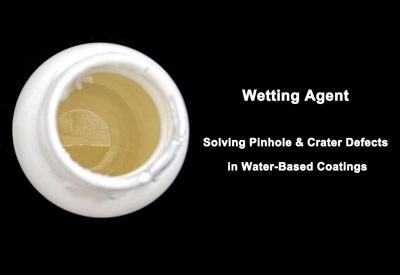
    Solving Pinhole & Crater Defects in Water-Based Coatings Advanced wetting agents for flawless finishes — solve the defects driven by surface tension imbalances. Pinholes and pits are common defects on water-based paint surfaces, caused by surface tension imbalances. This article explores their causes and proposes corresponding solutions. As a chinese top wetting agent supplier, iSuoChem can supply a systematic paint solution for surfactant wetting additives, such as LD-8270 and WTA-245T, which can reduce surface tension in a very short time, thus resolving wetting-related problems. Introduction Perfect paint film effects are elusive, yet the pursuit of perfection is fundamental to all industrial and architectural coatings. However, when formulating or applying water-based pai...

leave a message

leave a message
Looking for solutions for your product application? Tell us your needs, and we will match you with the most suitable product/solution. Leave us a message directly, and we will get back to you promptly.
Submit
Contact Us:info@isuoadditives.com

Home

Products

whatsApp

contact

Start a Conversation

Hi! Click one of our members below to chat on