DOP vs. DOTP: Which Plasticizer Is Right for Your Product?
iSuoChem — One of China's Leading Suppliers of Plastic Plasticizers
Introduction
In the processing of flexible PVC products and various polymer materials, the choice of plasticizer directly impacts a product's performance, cost, and regulatory compliance. Dioctyl Phthalate DOP and Dioctyl Terephthalate DOTP are two common plasticizers found on the market; however, many buyers lack a clear understanding of the differences between them.
iSuoChem provides a systematic comparison of DOP and DOTP, covering key aspects such as basic chemical information, characteristics, applications, and storage and transportation requirements.
I. Basic Information at a Glance
| Application Scenario |
Recommended Choice |
Reason |
| General PVC soft products (film, footwear, artificial leather) |
DOP (lower cost) |
Sufficient performance, cost-effective |
| Heat-resistant cable compounds (70°C and above) |
DOTP |
Low heat loss, good insulation |
| Outdoor products in cold regions |
DOTP |
Excellent cold resistance (freezing point -48°C) |
| Medical, toys, food contact materials |
DOTP |
Non-toxic, environmentally friendly |
| Soap-water / oil resistant products (washing machine hoses, oil pipes) |
DOTP |
Excellent extraction resistance |
| Coatings, adhesives, lubricants |
DOTP |
Good fluidity, inherent lubricity |
| Export to European and American markets |
DOTP |
Complies with environmental regulations |
II. DOTP is absolutely superior to DOP, while DOP Offers a Lower Price Point
1. Environmental Characteristics
DOP: Classified as a phthalate-based plasticizer, it is subject to restrictions in certain countries and regions (e.g., under EU REACH regulations and RoHS directives). It is particularly unsuitable for use in toys, medical supplies, and food-contact materials.
DOTP: A non-toxic, eco-friendly primary plasticizer that complies with increasingly stringent environmental standards, making it ideal for export markets and high-end applications.
Purchasing Advice: If your products are sold in Europe or the Americas, or are intended for use in children's products or the medical sector, DOTP is the safer choice.
2. Heat Resistance and Volatility
DOP: Exhibits only average heat resistance; it is prone to volatilization at high temperatures, and prolonged use can lead to material hardening and brittleness due to this evaporation.
DOTP: Features low thermal loss (only 0.10–0.25% after 3 hours at 125°C) and a high flash point of 205–210°C. It is particularly well-suited for 70°C-rated cable materials and other PVC products requiring high heat resistance.
Purchasing Advice: For the production of heat-resistant cables, automotive interiors, hoses designed for high-temperature environments, and similar products, DOTP is the preferred choice.
3. Cold Resistance (Low-Temperature Flexibility)
DOP: Exhibits relatively poor flexibility at low temperatures.
DOTP: Has a freezing point of approximately -48°C. Its linear molecular structure endows it with excellent cold resistance—similar to that of DOS and DOA—allowing it to maintain good flexibility even at low temperatures.
Purchasing Advice: For outdoor products intended for use in cold regions (such as winter-grade cables or outdoor films), DOTP offers a distinct advantage.
4. Electrical Insulation Properties
DOP: Exhibits average electrical insulation properties.
DOTP: Possesses excellent electrical insulation properties, making it an ideal choice of plasticizer for cable compounds.
Procurement Recommendation: For wires, cables, and electrical insulation materials, DOTP is recommended.
5. Extraction Resistance (Resistance to Soap Water, Oil, and Solvents)
DOP: Offers moderate extraction resistance; it is easily extracted when exposed to soap water, oils, or organic solvents.
DOTP: Demonstrates excellent resistance to extraction; products remain more stable when exposed to environments involving detergents, greases, and similar substances.
Procurement Recommendation: For products that come into contact with detergents (e.g., washing machine hoses) or for oil-resistant seals, DOTP is the more suitable choice.
6. Lubricity and Flowability
Additional Advantages of DOTP:
Good lubricity: Can serve as a lubricant or additive for precision instruments.
Low viscosity and high flowability: Suitable for systems with high processing flow requirements, such as coatings and adhesives.
Procurement Recommendation: For coatings, adhesives, and precision lubrication applications, DOTP is the superior choice.
III. Similarities: Storage, Transport, and Handling Precautions
The requirements for storage and transport are largely identical for both substances:
Storage: Store in a sealed, cool, and well-ventilated warehouse; protect from moisture and keep away from sources of fire and heat.
Segregation: Must not be stored together with oxidizing agents or acids.
Container Materials: Aluminum or stainless steel (V4A/V2A); iron drums require an internal oil-resistant coating.
Transport: Handle with care to prevent damage to packaging.
Personnel Protection: Self-priming filtering gas mask + chemical safety goggles.
IV. Summary of Application Scenario Comparisons
| Parameter |
DOP |
DOTP |
| Chemical Name |
Dioctyl phthalate |
Dioctyl terephthalate |
| CAS Number |
Not provided (common: 117-81-7) |
6422-86-2 |
| Appearance |
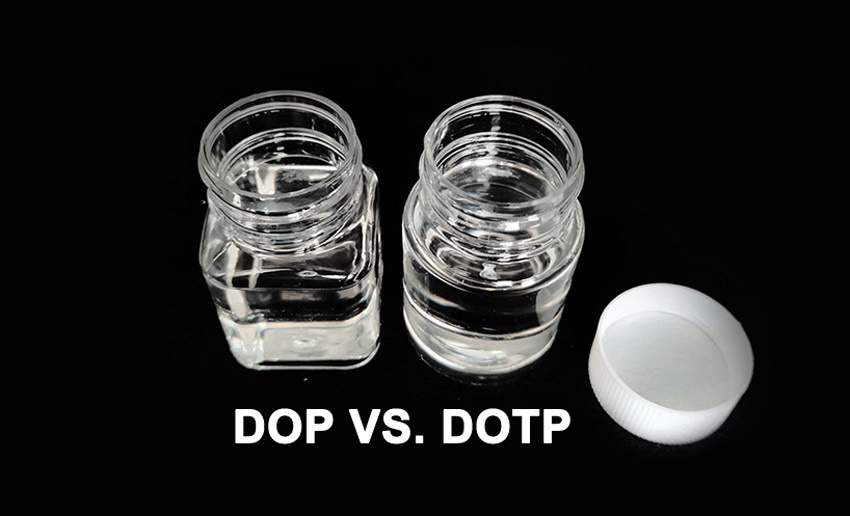
Colorless transparent oily liquid |
Colorless transparent oily liquid |
| Environmental Performance |
Conventional type, restricted in some applications |
Non-toxic, environmentally friendly primary plasticizer |
V. Procurement Decision Guide
Choose DOP When:
There are no specific requirements regarding environmental protection.
The operating environment is at ambient temperature, with no contact with food or the human body.
The primary objective is to minimize raw material costs.
Choose DOTP When:
The product is intended for export or targets the high-end market.
Requirements include any of the following: heat resistance, cold resistance, extraction resistance, or high electrical insulation.
Applications involve cables, automotive components, medical devices, toys, or products that come into contact with detergents.
The goal is to ensure compliance with future environmental protection trends in a single step.
Conclusion
While DOP and DOTP may appear similar on the surface, there are significant differences between them in terms of performance and regulatory compliance. DOTP serves as an upgraded alternative to DOP, offering comprehensive advantages—particularly in terms of environmental compliance, heat resistance, cold resistance, and electrical insulation properties. Although the cost of DOTP is slightly higher, an increasing number of enterprises are making the switch to DOTP when factoring in regulatory risks, product longevity, and brand image.
As one of China's leading suppliers of plastic plasticizers, iSuoChem provides a stable supply of high-quality DOP and DOTP, alongside professional technical support and sample testing services. We invite you to contact iSuoChem to discover the optimal plasticizer solution tailored to your specific products.