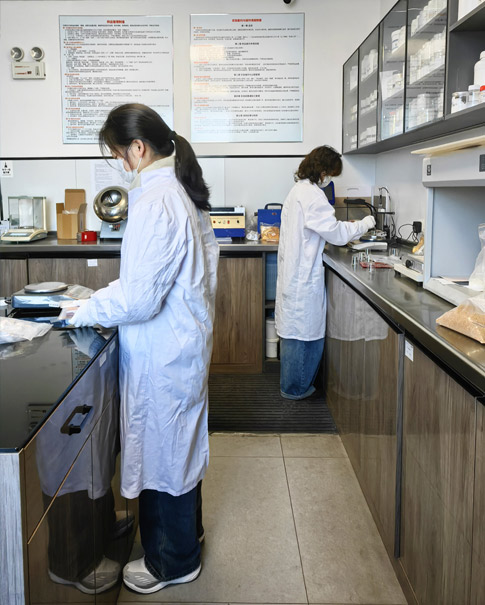
What is Wax? Wax has a melting point of at least 40°C, as opposed to fats and oils. It has relatively low melt viscosity (droplets) unlike most resins and plastics. It shows no chemical decomposition at higher temperatures, which distinguishes them from natural resins. Classification: Natural, semi-synthetic, synthetic waxes.
Wax Appearance & Forms
Waxes come in different physical forms to meet various production needs. Common forms include: block, flake, granule, and powder. Each form has its own benefits. Blocks and flakes are easy to transport and store. Granules and powders mix faster into coatings and inks. They also disperse more evenly in the final product.
📌 Wax Appearance
Block | Flake | Granule | Powder
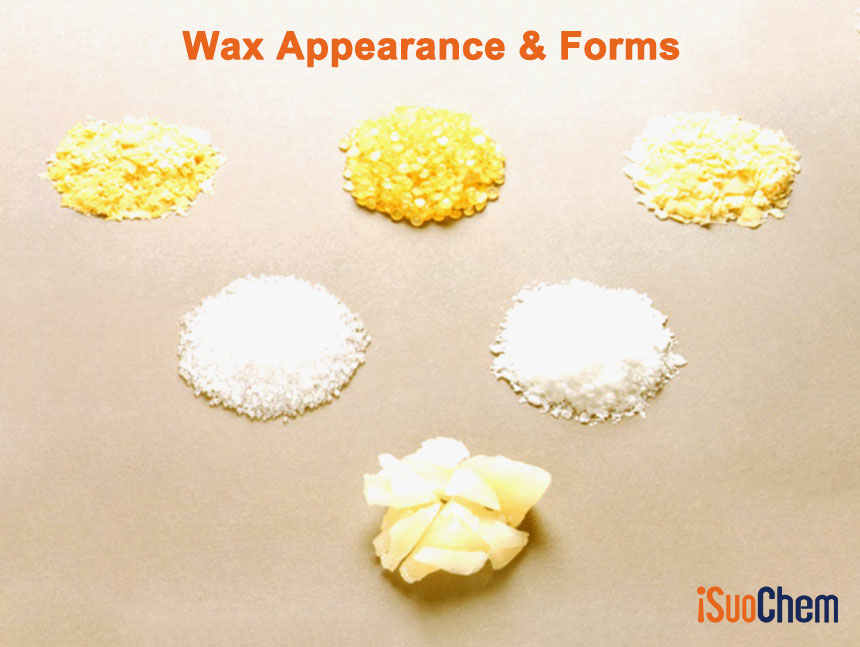
Pic 1: Different forms of wax additives - block, flake, granule, and powder
Sources of Synthetic Waxes
Synthetic waxes are made through different chemical processes. They can be divided into several categories based on how they are produced.
| Category |
Types & Examples |
Key Features |
| Semi-synthetic |
Amide waxes, Modified waxes |
Made from natural waxes with chemical modification. Better performance than natural waxes. |
| Synthetic (Cracking) |
Polyethylene wax (PE wax) |
Made from cracking polyethylene. Good hardness and melt point. Support factory directly sale polyethylene wax price. |
| Synthetic (Homopolymer) |
Homopolymer wax, Polypropylene wax (PP wax) |
Single monomer polymerization. Consistent quality and properties. |
| Synthetic (Copolymer) |
Copolymer wax, Ethylene Vinyl Acetate (EVA wax), Ethylene Acrylic Acid (EAA wax) |
Two or more monomers. Better compatibility and special functions. |
iSuoChem® Main Wax Products for Coatings & Inks
We supply a complete range of wax additives for coatings, inks, and other industrial applications. These micronized wax powder are designed to improve surface properties like scratch resistance, slip, matting, and anti-blocking.
🌿 Carnauba Wax (Brazilian Wax)
Carnauba wax is a natural wax from Brazil. It comes from the leaves of the Copernicia prunifera palm tree. This wax is known as the "Queen of Waxes." It has very high hardness and a high melting point (around 82-86°C). It gives excellent gloss and slip to coatings. It is often used in automotive waxes, floor polishes, and high-end printing inks.
⛽ Fischer-Tropsch Wax (FT Wax)
FT wax is a synthetic wax made from natural gas or coal. It has a very high melting point (up to 100°C) and low oil content. It is very hard and has a fine crystal structure. This wax provides strong scratch and abrasion resistance. It is widely used in hot melt adhesives, PVC processing, and powder coatings.
🧪 Polyethylene Wax (PE Wax)
Micronized PE wax is made from the cracking or polymerization of ethylene. It is one of the most common wax additives for coatings and inks. It offers good slip, rub resistance, and matting effects. It comes in different grades: oxidized Polyethylene Wax, non-oxidized Polyethylene Wax, and micronized powder PE Waxes. It works well in solvent-based and water-based systems. (Note: We also supply Liquid high-density polyethylene wax emulsion)
🔗 Amide Waxes (Polyamide & Amide Series)
Amide waxes are semi-synthetic waxes. They are made from fatty acids and amines. They have strong thixotropic properties. They help control the rheology of coatings and inks. They improve pigment suspension and prevent settling. Our amide wax series includes EBS (ethylene bis stearamide) and other special grades for high-performance systems.
📐 PET Wax (Polyester Wax)
PET wax is a special polyester-based wax. It offers unique performance in high-temperature applications. It provides good release properties and thermal stability. It is often used in powder coatings and engineering plastics.
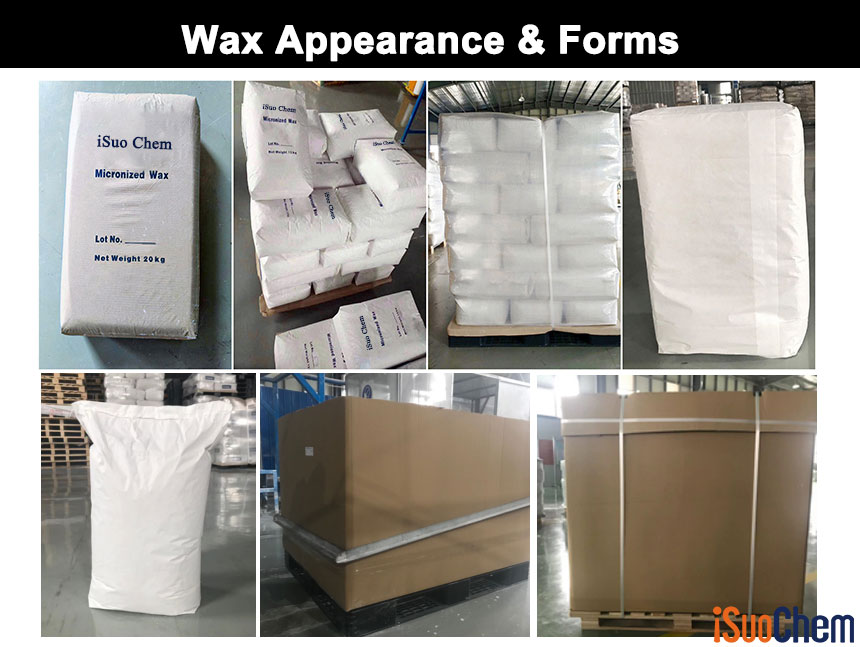
Pic 2: Wax additives improve scratch resistance, slip, and matting in coatings and inks
How to Choose the Right Wax for Your Coating or Ink
Choosing the right wax depends on your application needs. Here are some simple guidelines:
- For high gloss and slip: Choose carnauba wax or high-density PE wax.
- For strong scratch resistance: Choose FT wax or PP wax.
- For matte finish: Choose micronized PE wax with larger particle size.
- For anti-settling and rheology control: Choose amide waxes like EBS or polyamide wax.
- For water-based systems: Choose oxidized PE wax or other water-compatible grades.
- For high-temperature processing: Choose FT wax or PET wax.
Conclusion
Wax additives are essential for improving coating and ink performance. They provide surface protection, improve feel, and enhance visual effects. Understanding wax types - from natural waxes like carnauba to synthetic waxes like PE wax and FT wax - helps you make better formulations.
Here, you can find a full range of wax additives for various paints/coatings, inks, and plastics. Our products include carnauba wax, FT wax, PE wax, amide wax, PET wax, and more. We also provide technical support to help you select the right wax for your needs. Contact iSuoChem Additives to learn more or request free samples.
FAQ (People Also Asked)
Q1: What is the difference between PE wax and FT wax?
PE wax comes from polyethylene. PE wax has high density polyethylene wax and low density polyethylene wax. FT wax comes from natural gas or coal. Coating grade FT wax is harder and has a lower melting point (104-110°C). PE wax melting point is higher (102-130°C actually similar, but FT wax is more crystalline). For coatings, FT wax gives stronger scratch resistance. PE wax gives better slip and gloss. Many formulators use both for balanced performance.
Q2: Can I use carnauba wax in water-based coatings?
Yes, but you need a special process. Pure carnauba wax does not mix with water. You need to use a water-based emulsion or micronized wax powder that is pre-dispersed. Many suppliers offer carnauba wax emulsions for water-based systems. These are easy to add and give good results.
Q3: What is the typical addition rate for paint wax?
The typical addition rate is 0.5% to 5% of total formulation weight. For slip and rub resistance, start with 1-2%. For matting effects, you may need 3-5%. Always test first. Too much wax can cause problems like poor adhesion or haziness in clear paints.
Q4: Are synthetic waxes better than natural waxes?
It depends on your needs. Natural waxes like carnauba give high gloss and a warm feel. They are renewable and biodegradable. Synthetic waxes like PE and FT wax give more consistent quality. They are often harder and have higher melting points. Many modern formulations use a blend of both to get the best properties.
— iSuoChem: Your reliable partner for wax additives in coatings, inks, and plastics.